Office air problems tend to show up as complaints before anyone thinks about the HVAC system. The room after lunch feels stuffy, people get afternoon headaches, someone's allergies flare up at work but not at home. Most of the time the fix lives in the mechanical system and how the space is run.
What are the signs of poor air quality in an office?
- Stuffy, stale air in conference rooms or interior offices
- Headaches, tiredness or trouble focusing that improve after leaving
- Dust building up quickly on desks and around vents
- Musty or chemical odors
- Hot and cold spots, or rooms that feel humid
- More complaints about allergies or irritated eyes
Any one of these may be minor. Several at once usually means the building isn't getting enough fresh air, or isn't filtering and moving air the way it should.
It helps to write down when and where complaints come up. Problems that happen in one wing, at the same time each day, or only after the building warms up in the afternoon give a technician a head start on finding the cause. Notes like these also make it easier to tell whether a fix actually worked.
How do you get more fresh air into an office?
Commercial HVAC systems are designed to bring in a set amount of outside air. Over time, outside air dampers get stuck, adjusted closed to save energy, or blocked. When that happens, carbon dioxide and odors build up in occupied rooms.
A technician can check that dampers open and the economizer works, and confirm the system is ventilating for how the space is used today. Offices that have been reconfigured, with walls added or more people per room, often need their airflow rebalanced.
A simple CO2 monitor in a busy conference room can tell you a lot. Levels that climb quickly during meetings mean that room needs more ventilation.
What filters should an office HVAC system use?
Many commercial rooftop units leave the factory set up for basic filters. Moving to MERV 13, where the equipment can handle it, catches far more fine dust, pollen and smoke. The key is checking airflow after the change and setting a replacement schedule. A filter that's been in for six months does little good.
In San Diego and Orange County, wildfire season is a good reason to keep spare filters on hand and change them more often when smoke is in the air.
Do office ducts and equipment need cleaning?
Yes, on a schedule. Coils that are caked with dirt hold moisture and grow mildew. Drain pans on rooftop units collect debris and standing water. Ductwork above drop ceilings collects dust, especially after remodels.
Construction is a big one. Drywall dust and sawdust from a tenant improvement project get pulled into returns and spread through the whole system. Protecting returns during work, and changing filters and cleaning ducts afterward, keeps that dust out of everyone's lungs.
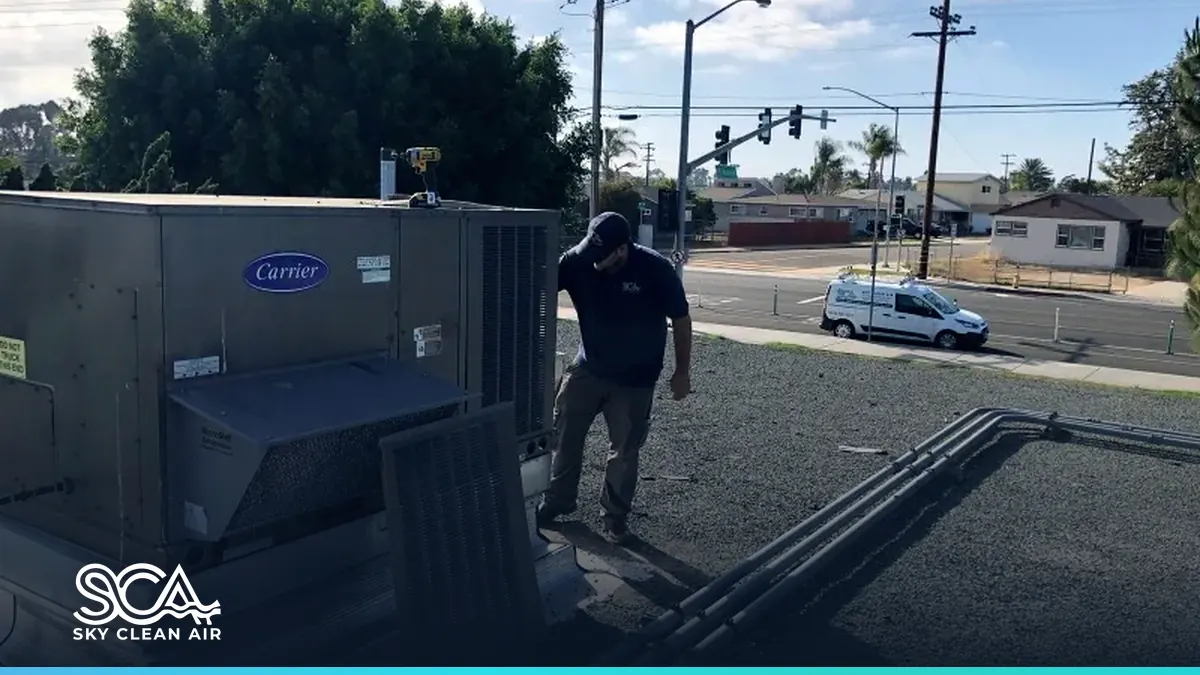
Our commercial HVAC service covers preventive maintenance on rooftop and split systems, coil and drain cleaning, and commercial duct cleaning, scheduled around business hours so work doesn't stop.
What can staff and facilities do day to day?
- Keep vents and returns clear. Boxes and furniture in front of returns starve the system of air.
- Move printers and copiers to a ventilated room if possible.
- Choose low-odor cleaning products and clean after hours.
- Fix leaks quickly. Water-stained ceiling tiles are a mold risk and should be replaced.
- Control humidity. Keep it in a comfortable middle range, and address any space that stays damp.
- Add portable HEPA purifiers in rooms the central system doesn't serve well.
How often should office HVAC systems be serviced?
Most commercial systems benefit from maintenance at least twice a year, with filter changes more often based on occupancy and conditions. Buildings with heavy use, kitchens or lots of foot traffic may need quarterly visits. A maintenance plan keeps the schedule on track so it doesn't fall off the list during a busy quarter.