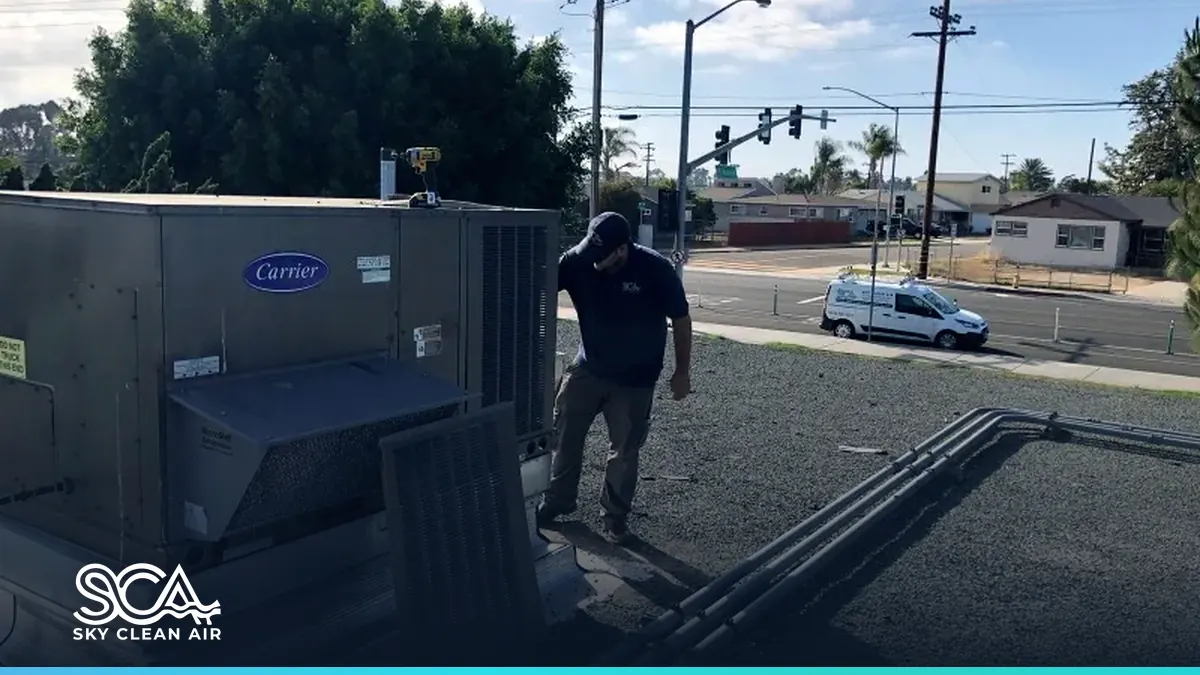
Why upgrade a commercial HVAC system?
For most businesses, heating and cooling is one of the largest utility costs, and comfort affects customers and staff every day. An older system can mean high bills, frequent repair calls, uneven temperatures, and poor air quality for the people in the building.
Upgrades also make sense when a building changes. A new tenant, a different floor plan, more staff, or new equipment that gives off heat can leave the existing system mismatched to the space.
What should a commercial HVAC assessment cover?
Before choosing equipment, get a clear picture of what you have. A good assessment looks at:
- Each unit's age, condition and repair history, especially rooftop package units
- Capacity versus actual load, based on the space, occupancy, lighting and equipment
- Controls, including thermostats, schedules and any building automation
- Ductwork for leaks, poor design or damage
- Ventilation and filtration to meet code and keep air quality healthy
- Refrigerant type, since older units may use refrigerants that are costly to service
Coastal properties in San Diego and Orange County should also be checked for corrosion on rooftop units, since salt air wears down coils and cabinets faster.
What upgrades give the best results?
The right mix depends on the building, but these are the most common:
- High-efficiency rooftop units. Newer units with variable-speed fans and multi-stage compressors use much less energy than older single-stage equipment.
- Smart controls and scheduling. Programmable or networked thermostats keep the system from running full tilt when the building is empty.
- Economizers. In our mild climate, economizers can use cool outdoor air for free cooling on many days and evenings. Existing economizers should be checked, since they often fail without anyone noticing.
- Demand-controlled ventilation. Adjusts fresh air based on how many people are in the space.
- Duct sealing and balancing. Delivers air where it's needed and fixes hot and cold spots.
- Better filtration and air cleaning. Upgraded filters and UV lights can improve air quality for staff and customers.
How do I keep the upgrade from disrupting business?
Planning is what keeps a commercial upgrade on track. A few practices help:
- Phase the work one unit or zone at a time so the rest of the building stays comfortable
- Schedule around your hours, such as early mornings, evenings or weekends
- Plan crane lifts and roof access in advance for rooftop equipment
- Time replacements for mild weather in spring or fall, rather than during a heat wave
- Coordinate with property management on permits, access and any tenant notices
What about restaurants, laundries and other specialty spaces?
Some businesses have needs beyond comfort cooling. Restaurants deal with kitchen heat and makeup air. Laundromats, salons, gyms and multi-unit properties often have heavy dryer use, and their dryer vents need regular cleaning to prevent fires and keep machines running well.
Server rooms, medical and dental offices, and spaces with lots of computer equipment may also need dedicated cooling that runs around the clock, separate from the main system. Ductless mini-splits are a common way to handle those rooms without oversizing the rest of the building's equipment.
A commercial upgrade is a good time to look at the whole building, including ducts and dryer vents, so everything works together.
How do I plan and budget for an upgrade?
Start with the units that are oldest, least reliable or serving the most important spaces. Ask about utility incentives for efficient commercial equipment, which may help offset costs. Keep good records of what each unit serves, its age and its repair history, since that makes future decisions much easier. A planned replacement schedule spreads the expense over several years and reduces emergency calls.
Our commercial HVAC team works with offices, retail, restaurants and multi-unit properties across San Diego County and Orange County. We can assess your system and provide a free estimate, with work scheduled to fit your business. You can reach us here to get started.