Why do commercial ducts get dirty?
Commercial HVAC systems move a lot of air for a lot of hours. Offices, retail spaces, clinics and warehouses run their systems most of the day, often with doors opening constantly. Every hour of operation pulls in dust, fibers, outside pollutants and whatever the business itself produces, from paper dust in offices to fine product dust in warehouses.
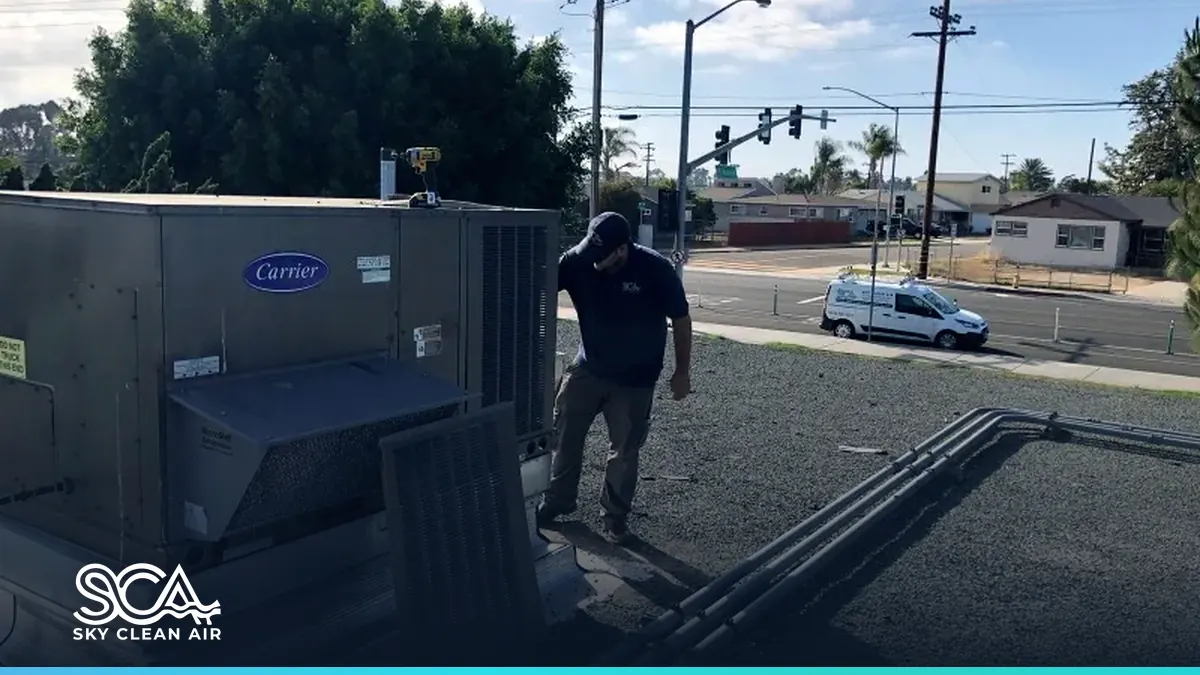
Many San Diego County commercial buildings use rooftop units with ducts running above drop ceilings. Those return plenums collect dust from ceiling tiles and the space above the grid, which ends up in the airstream if the system isn't kept clean.
What are the main benefits?
- Cleaner air and surfaces. Less dust blowing from diffusers and settling on desks, shelves, merchandise and equipment.
- Fewer complaints. Stale air, dust and odors are frequent sources of complaints in shared workspaces.
- Better airflow. Heavy buildup in ducts, dampers and on coils restricts airflow, leaving some zones too warm or too cold.
- Equipment that runs as designed. Clean coils and returns mean the system isn't working harder than it should to move air.
- Odor control. Ducts can hold onto odors from smoke, cooking, pests or past water leaks. Cleaning removes the source rather than masking it.
- A better impression. Customers notice dusty diffusers and stained ceiling tiles around vents in lobbies, waiting rooms and shops.
Which businesses benefit most?
Any building with occupants benefits, but some see more value:
- Medical and dental offices, where patients expect a clean environment.
- Restaurants and cafes, where cooking residue can reach the general HVAC system. Kitchen exhaust hoods are a separate system with their own cleaning requirements.
- Schools, daycares and gyms, with lots of people and lots of activity.
- Retail stores, where dust settles on merchandise.
- Offices after a remodel or tenant change.
- Warehouses and light industrial spaces that produce fine dust.
- Coastal properties, where damp marine air can encourage growth on coils and in drain pans.
When should a business schedule duct cleaning?
There's no single schedule for every building. Good times to clean include:
- After construction, renovation or tenant improvements
- When a new tenant moves into an existing space
- After a fire, a nearby wildfire with heavy smoke, a water leak or a pest problem
- When diffusers show visible dust or ceiling tiles around them are stained
- When filters load up much faster than they used to
- When employees or customers report dust, odors or stuffy air
What does a commercial duct cleaning include?
Scope varies with the building, but a thorough job usually covers:
- An inspection of ducts, returns, plenums and the air handling or rooftop units
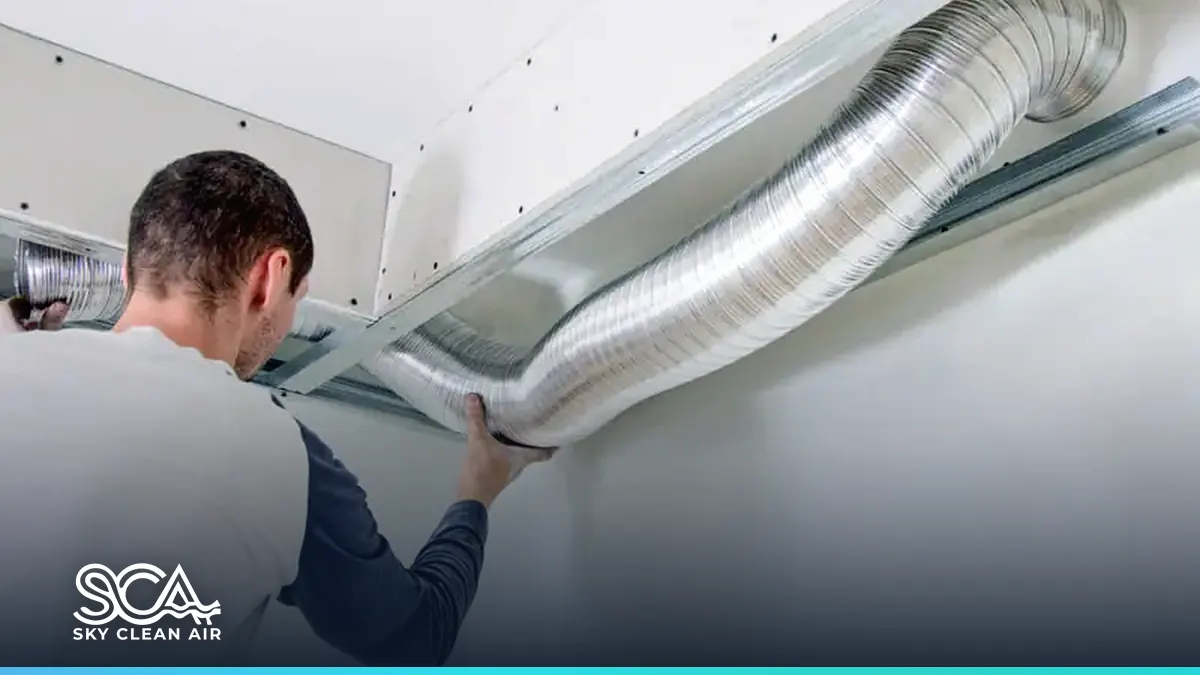
- Negative-pressure cleaning of supply and return ducts
- Cleaning of diffusers, grilles and return plenums
- Coil, blower and drain pan cleaning on the equipment
- New filters, and notes on any damaged or leaky ductwork found along the way
How do you keep the business running during cleaning?
Before the crew arrives, it helps to confirm roof access for rooftop units, clear space under ceiling access points and let tenants or staff know which areas will be worked on and when.
Commercial cleaning can usually be scheduled after hours, on weekends or zone by zone so work areas stay open. A good plan covers access to rooftop units and ceiling spaces, protection for furniture and equipment, and containment so loosened debris goes into the collection equipment, not into the office.
Afterward, ask for a short report with before and after photos and notes on anything that needs repair, such as damaged ducts, rusted drain pans or dampers that are stuck. That gives facility managers a record for future planning.
It pays to pair duct cleaning with a filter upgrade, coil cleaning and a check of dampers and drain pans so the whole system is clean at once.
Our commercial HVAC and duct cleaning team works with property managers and business owners across San Diego and Orange County. You can request a free estimate through our contact page.