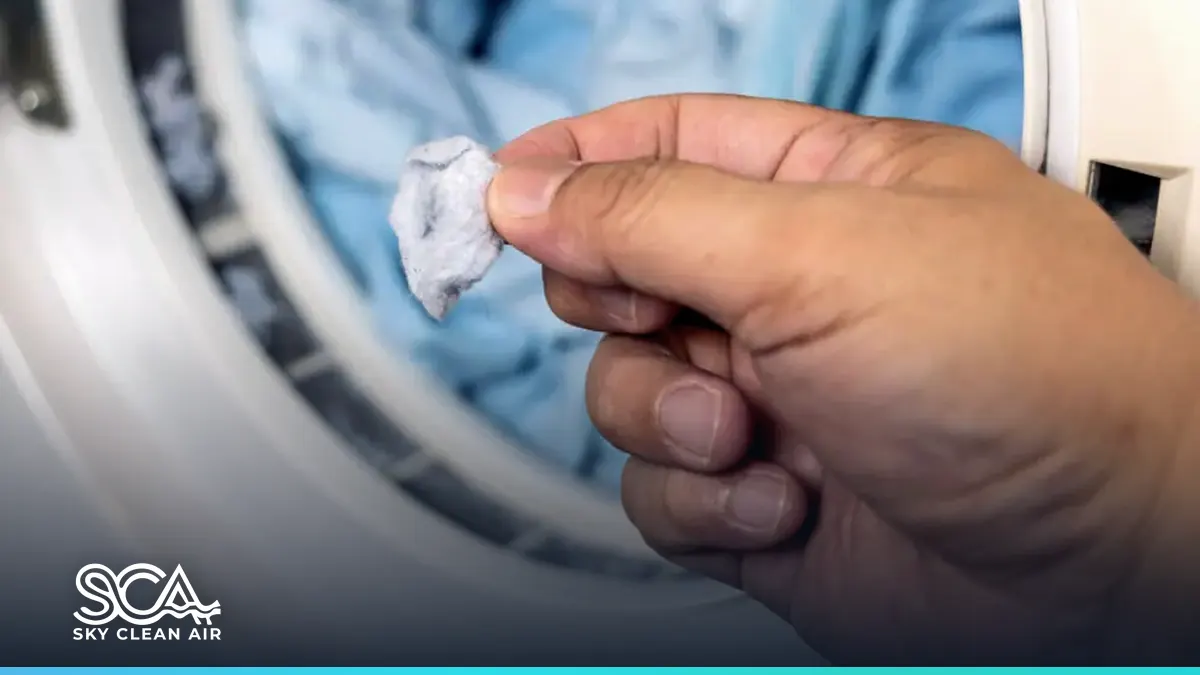
Your lint screen catches most of the lint, but a steady trickle gets past it every load. That lint collects inside the vent, at elbows and low spots, and slowly narrows the passage. A professional cleaning clears the whole run, not just the part you can reach from behind the dryer.
What happens during a dryer vent cleaning?
- Inspection. The technician checks the dryer, the transition hose, the vent route and the outside termination, whether it's on a wall or the roof.
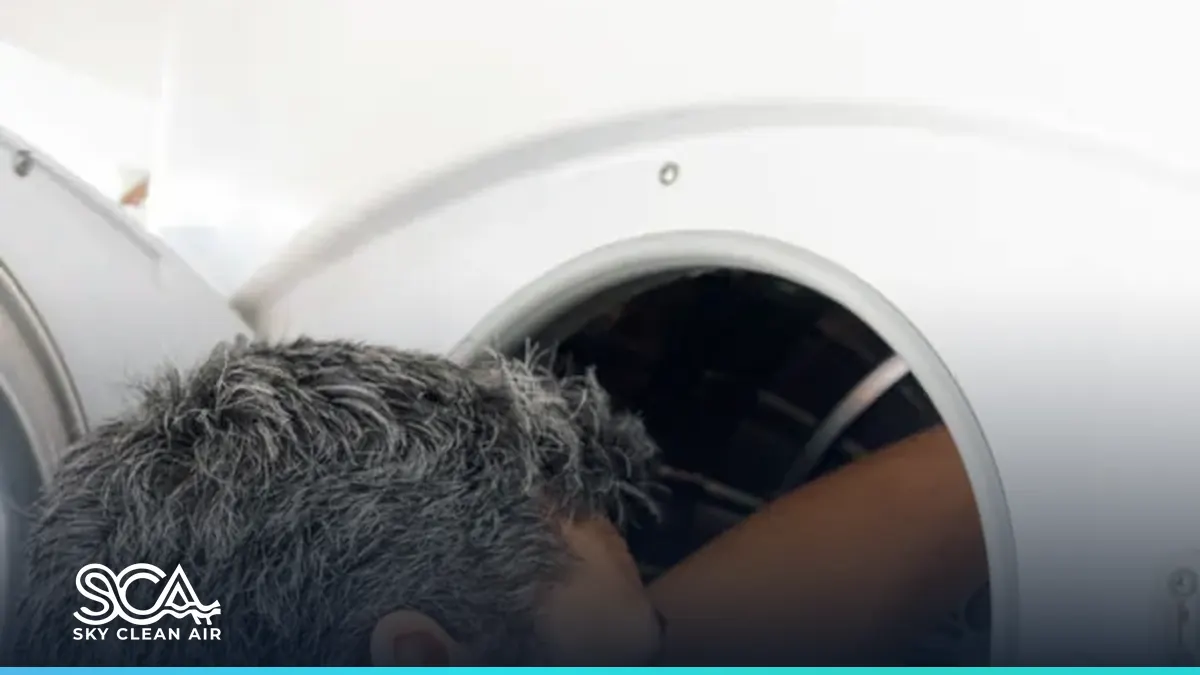
- Pulling the dryer out. The dryer is moved carefully so the hose and wall connection can be reached. With a gas dryer, care is taken not to stress the gas line.
- Disconnecting the transition hose. The short hose between the dryer and the wall is removed, cleaned or replaced.
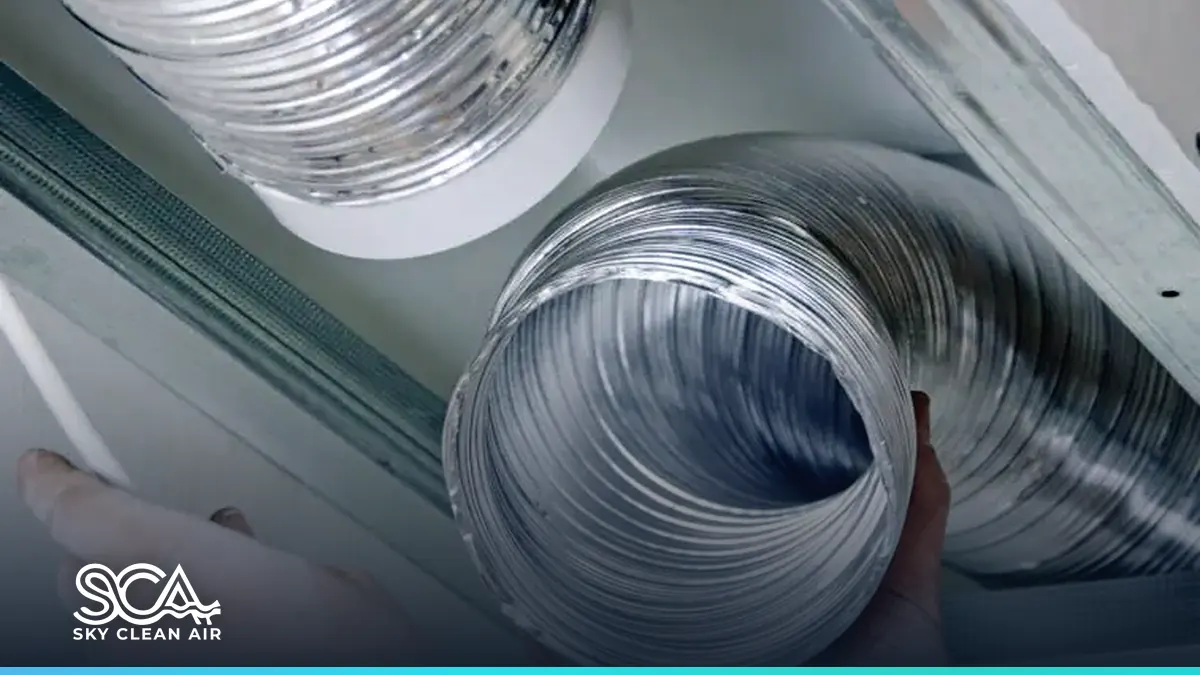
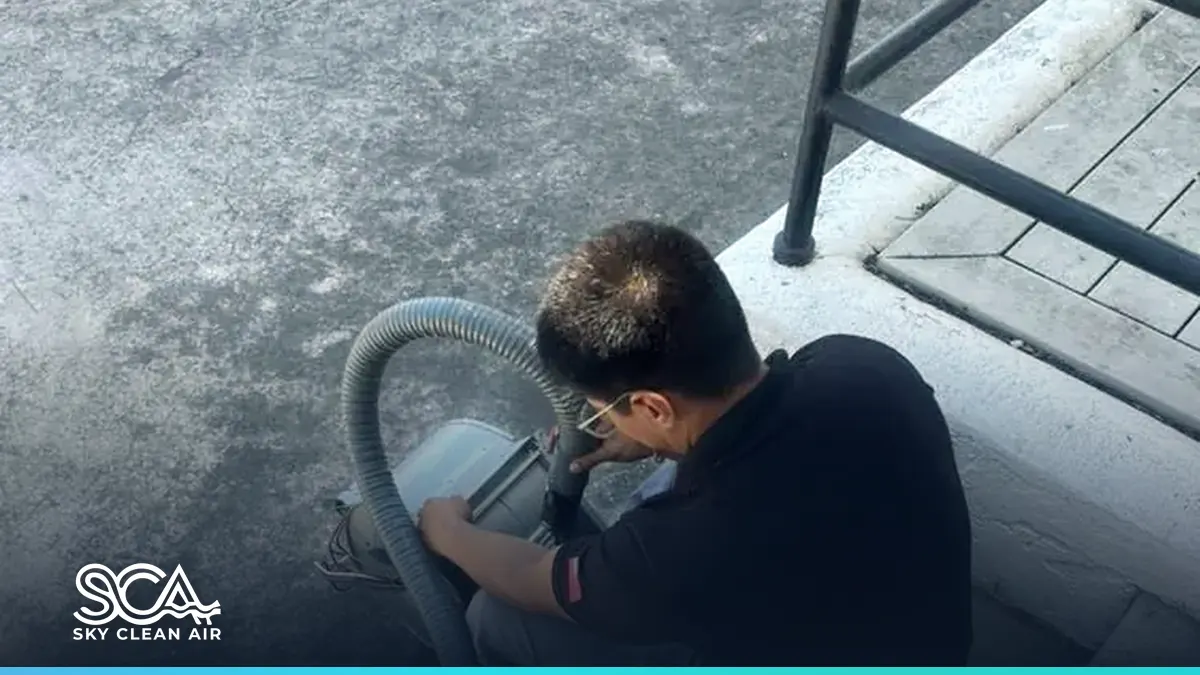
- Cleaning the vent run. Rotary brushes on flexible rods spin through the duct to break lint loose, while air or a vacuum pulls it out. Long runs are often cleaned from both ends.
- Cleaning the termination. The outside cap and flap are cleared of lint, nests and debris, and checked to make sure they open freely.
- Checking the dryer outlet. Lint around the back of the dryer and the exhaust outlet is cleaned out.
- Reconnecting. The dryer is reconnected with a proper hose and secure clamps, then moved back without crushing it.
- Airflow test. The dryer runs while airflow is checked at the outside vent.
What does the technician look for during the inspection?
- Crushed, kinked or torn transition hoses
- Foil or vinyl flex hose, which traps lint and is easy to crush
- Disconnected sections inside walls, attics or under the floor
- Screens on the outside cap, which catch lint and shouldn't be there
- Stuck or broken flaps
- Bird or rodent nests
- Very long runs or too many turns
- Signs of moisture or lint in the laundry room, attic or garage
What about roof dryer vents?
Roof vents are common in condos, townhomes and two-story houses. They clog faster because lint has to travel upward and settles back down at the lowest point. They're also hard and risky to reach. Cleaning them may involve working from the roof as well as from inside. If your dryer exhausts through the roof, regular cleaning is especially important.
What repairs might be recommended?
Sometimes cleaning alone isn't enough. Common follow-up work includes:
- Replacing a foil or vinyl hose with semi-rigid metal duct
- Replacing a broken or screened outside cap with a proper dryer vent cap
- Reconnecting or replacing damaged sections
- Rerouting a vent to shorten it or reduce turns
- Adding a recessed dryer box so the dryer can sit closer to the wall without crushing the hose
You should always get an explanation before any extra work is done.
How is a professional cleaning different from a store-bought kit?
Brush kits work for short, straight vents. They have limits on long runs, roof vents and vents that pass through walls or attics. Pushing a brush too hard can separate joints inside a wall, and there's no easy way to know you reached the whole run. A professional setup combines powered brushes with strong airflow or vacuum, works from both ends when needed and confirms the result with an airflow check.
How often should you have your dryer vent cleaned?
Once a year is a common guideline for most homes. Plan on more often if you have:
- A large household doing laundry every day
- A long vent run or a roof vent
- Pets that shed
- Drying times that have started to creep up
How can you keep the vent clean between visits?
- Clean the lint screen before or after every load.
- Wash the screen with warm soapy water every few months if you use dryer sheets.
- Don't overload the dryer.
- Check the outside flap now and then to make sure it opens while the dryer runs.
- Avoid pushing the dryer tight against the wall.
Learn more on our dryer vent cleaning and repair page, and check our current specials.