Why do roof dryer vents clog faster?
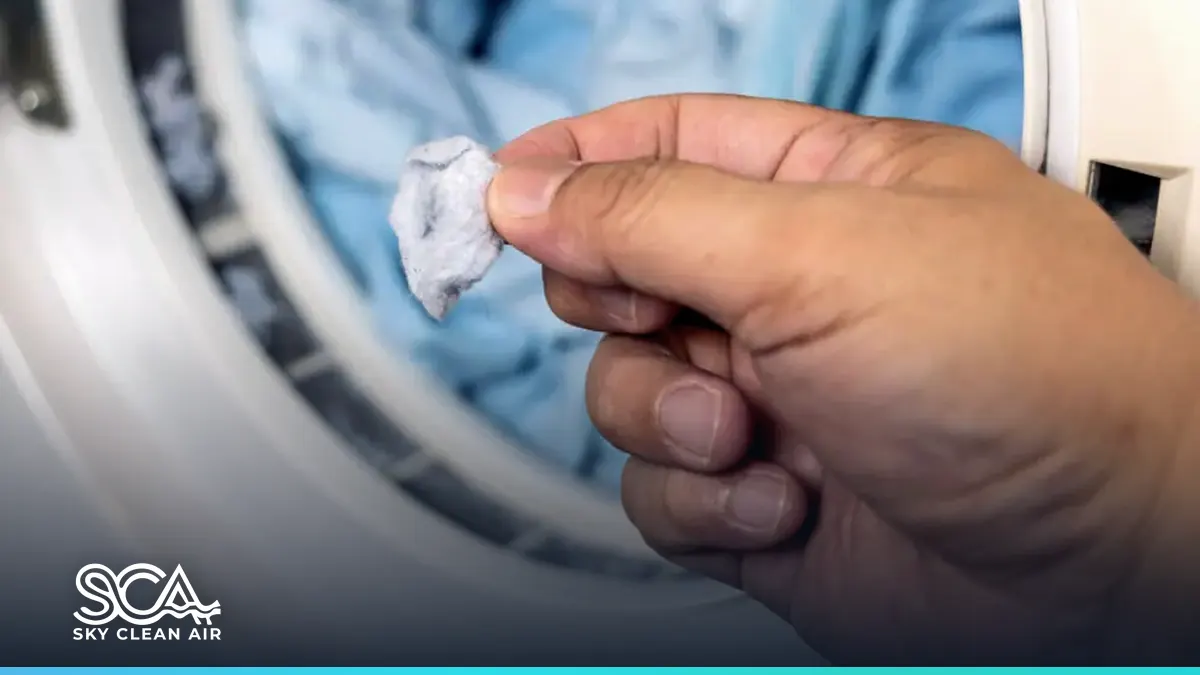
A dryer vent that exits through the roof has to push lint-filled air straight up, often through a long run that passes through the attic. Gravity works against it, so lint drops back and collects at bends and low spots. Many roof vent caps also have small openings or screens that trap lint at the very end of the line.
Birds and rodents add another problem. A warm, sheltered roof cap is an inviting place to build a nest, and a single nest can block the vent almost completely.
What are the signs of a blocked roof vent?
- Loads take noticeably longer to dry
- The dryer shuts off mid-cycle from overheating
- Hot, humid air in the laundry room
- A burning or musty smell when the dryer runs
- Lint visible around the roof cap or on the roof
- Bird activity at the vent cap
- Error codes on newer dryers that indicate restricted airflow
How do professionals clean a roof dryer vent?
The process covers the entire run from the dryer to the roof:
- Inspect inside. The technician pulls the dryer out, checks the transition hose and disconnects it from the wall.
- Set up the vacuum. A high-powered vacuum is connected at one end of the duct to pull loosened lint out.
- Brush from below. Rotary brushes on flexible rods are fed up through the duct from the laundry room.
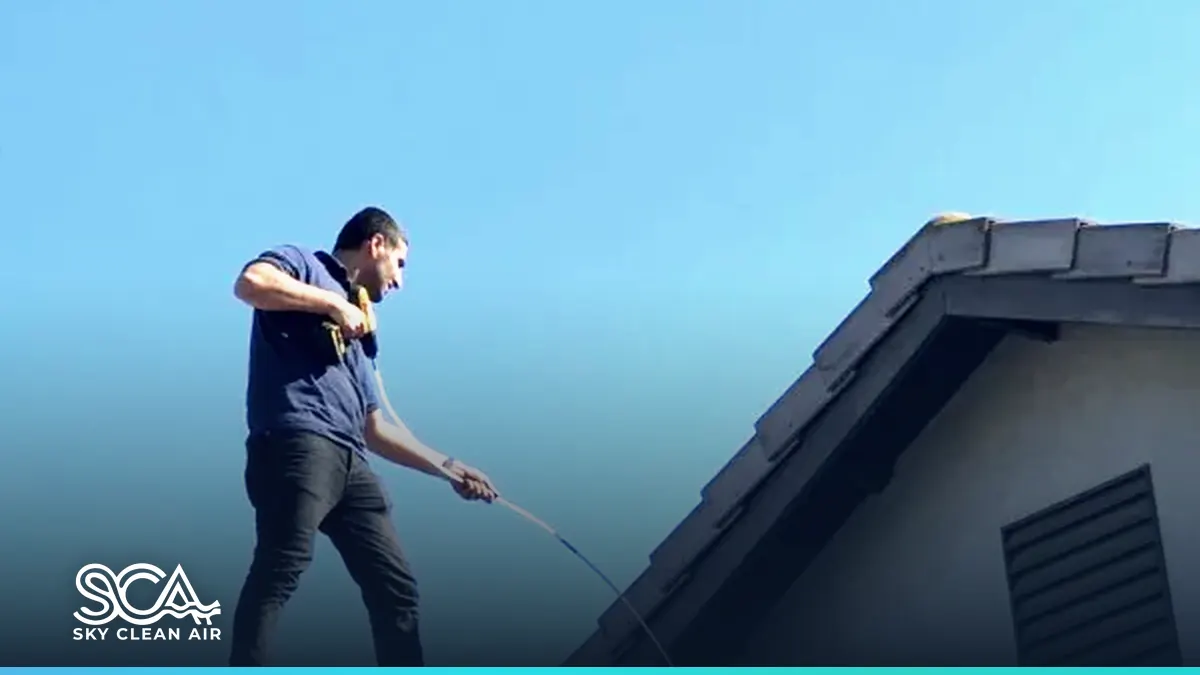
- Work from the roof. A technician safely accesses the roof, removes the vent cap and clears lint, nests and debris.
- Brush from above. The duct is brushed from the top down so both ends are fully cleared.
- Check the cap and duct. Damaged or poorly designed caps, crushed sections in the attic and disconnected joints are noted for repair.
- Reconnect and test. The hose is reattached and airflow is checked at the roof with the dryer running.
Can you clean a roof dryer vent yourself?
You can clean the lint screen, the transition hose and the lower part of the duct from inside the laundry room. The roof part is another story. Working on a roof brings real fall risk, and many Southern California homes have tile roofs that crack easily under foot.
A homeowner's brush kit also may not reach the full length of a long roof vent, and pushing hard against a blockage can pack lint tighter or separate a joint in the attic. If your vent goes through the roof, it's safer and more thorough to have it professionally cleaned.
Our dryer vent cleaning service handles roof vents across San Diego County and Orange County, including cap replacement when needed.
How often should a roof dryer vent be cleaned?
Plan on at least once a year, and more often if you do a lot of laundry, have pets or have had bird nests before. Because roof vents clog faster than short wall vents, it's smart to watch drying times closely between cleanings.
If you notice a load suddenly takes twice as long, don't keep running the dryer. Have the vent checked before the next big laundry day.
Can a roof dryer vent be improved or rerouted?
Sometimes. A few upgrades can make a roof vent work better and clog less:
- A proper dryer vent roof cap. Caps designed for dryers have a damper and an opening that lets lint escape. Screened caps meant for bathroom fans trap lint and should be replaced.
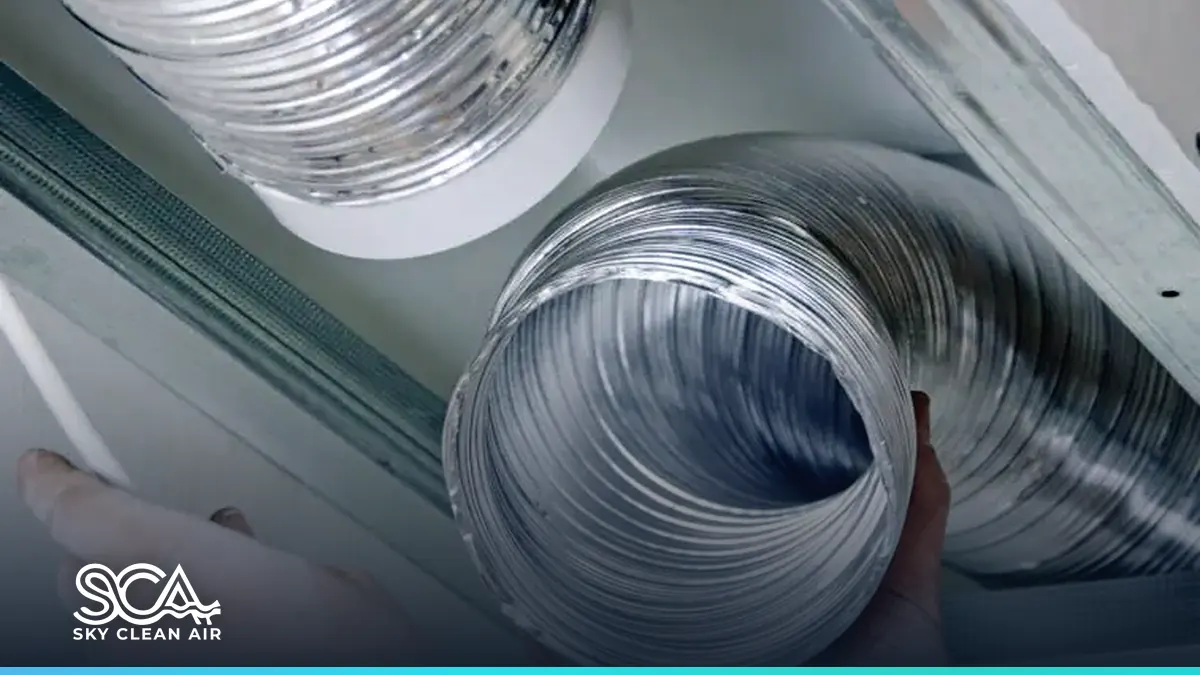
- Smooth metal duct. Replacing flexible duct in the attic with rigid metal reduces lint buildup.
- Fewer bends. Straightening the run where possible improves airflow.
- Rerouting to a wall. If the laundry room is on an exterior wall, a shorter side-wall vent may be an option.
- Booster fans. For very long runs, a dryer booster fan can help, but it needs to be installed and maintained correctly.
Does weather affect roof dryer vents here?
Yes, a little. Coastal salt air corrodes metal caps and dampers over time, which can cause them to stick partly closed. Santa Ana winds can blow debris into an open cap and occasionally slam dampers shut. Winter rain can also get into a damaged cap, and wet lint packs down hard.
Having the cap looked at during each cleaning catches these issues before they turn into a blockage.