Rodents in the attic rarely stay a small problem. They nest in insulation, chew through ducts and wiring, and leave droppings and urine behind. The sooner you spot the signs, the less cleanup you'll need.
What sounds do rodents make in the attic?
Most people notice the noise first. Rats and mice are most active at night, so listen for:
- Scratching or scurrying in the ceiling after dark
- Gnawing or chewing sounds
- Thumps or rolling noises, which can be rats moving nuts or fruit
- Squeaking, especially if there's a nest with young
Sounds in the walls or ceilings near the roof line usually mean the animals are traveling between an entry point and the nest.
What signs can I see in the attic?
With a flashlight from the attic hatch, look for these:
- Droppings. Rat droppings are dark and about the size of a raisin. Mouse droppings are much smaller, like grains of rice. They pile up along beams, near the hatch and around nests.
- Tunnels and trails. Rodents dig paths through blown-in insulation. You may see flattened runways or holes.
- Nests. Bundles of shredded insulation, paper, fabric or plant material, often tucked near the eaves.
- Gnaw marks. Fresh chewing on wood, pipes, ducts and wiring. Chewed wiring is a fire risk.
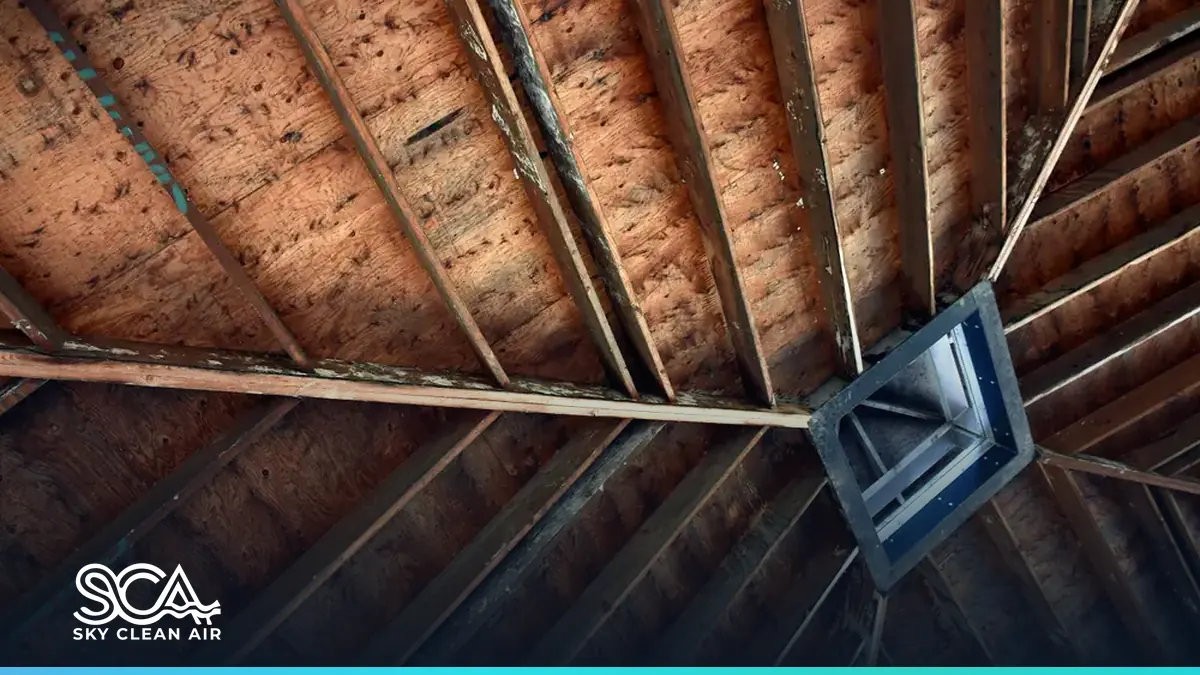
- Rub marks. Dark, greasy smudges along beams and around holes where they squeeze through.
- Torn ductwork. Rodents chew into flex ducts for warmth and nesting material.
- Food stashes. Seeds, nuts, pet food or fruit pits hidden in corners.
What signs show up around the outside of the house?
Walk around the home and look at the roof line. Gaps at the eaves, damaged vent screens, openings around pipes and loose roof tiles are common entry points. Roof rats are excellent climbers, so tree branches, vines and utility lines touching the house give them an easy path. Fallen fruit and open pet food in the yard also draw them in.
Why are rodents in the attic a health concern?
Rodent droppings and urine can carry diseases, and dried waste can turn to dust that gets into the air. If your ducts run through the attic and have tears or leaks, that contaminated air can be pulled into the system and sent into your rooms.
Don't sweep or vacuum droppings. Public health guidance is to wet them first with a disinfectant, wear gloves and a mask, and avoid stirring up dust. For anything beyond a few droppings, professional cleanup is the safer route.
How do you get rid of rodents in the attic for good?
Trapping alone doesn't solve it if there are still ways in. A complete job usually looks like this:
- Find and seal entry points. Close gaps at the roof line, vents and pipes with materials rodents can't chew through.
- Remove the animals. Trapping is done after or alongside sealing, so new ones don't keep arriving.
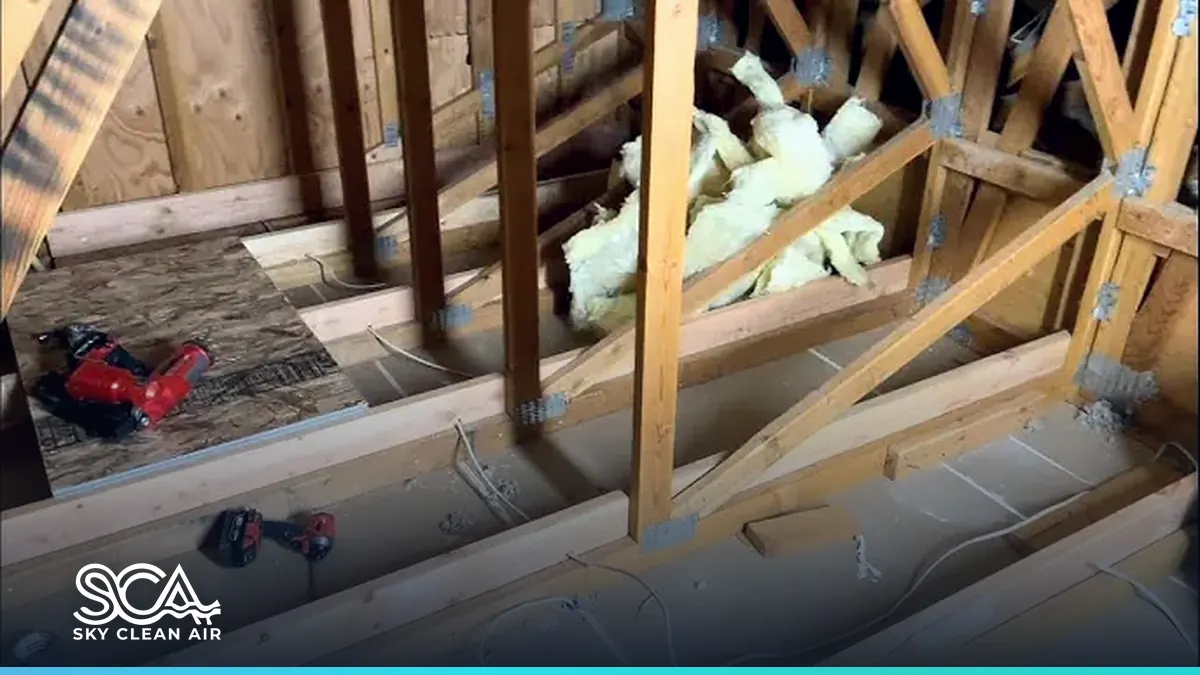
- Remove contaminated insulation. Insulation soaked with urine and droppings can't be cleaned. It needs to come out.
- Sanitize the attic. Surfaces are treated to reduce odors and contamination.
- Repair damage. Torn ducts get replaced or sealed, and chewed wiring should be checked by an electrician.
- Install new insulation. Fresh insulation restores comfort and energy performance.
Our rodent cleanup and attic insulation service covers removal, sanitizing, sealing and new insulation. If rodents got into the ductwork, we can repair or replace the damaged sections too.
How can I keep rodents from coming back?
Trim tree branches back from the roof, pick up fallen fruit, store pet food and birdseed in sealed containers, and check vent screens every year. A quick look in the attic each spring and fall will catch new activity early.
If you hear activity again after a cleanup, act quickly. A single new entry point is much easier to find and close than an attic that has been reoccupied for months. Keep an eye out for fresh droppings near the hatch, since that is often the first place new activity shows up.