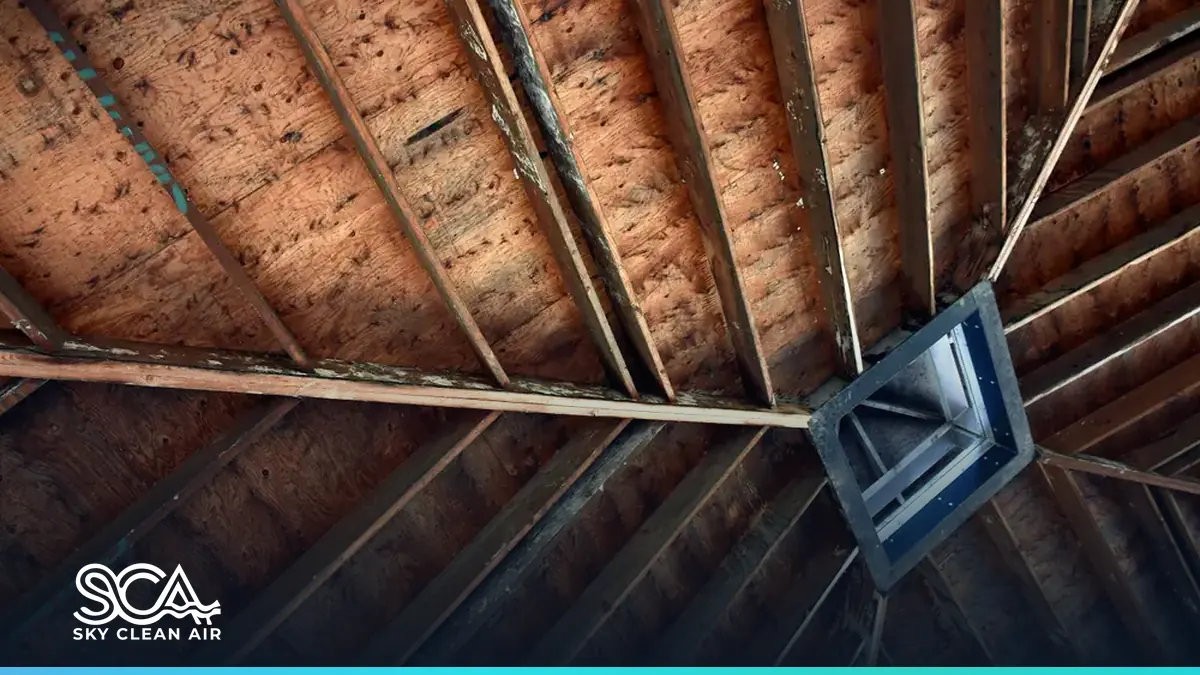

What causes mold in an attic?
Mold needs moisture, and attics usually get it from one of a few places. Cleaning mold without fixing the cause just means it comes back.
- Roof leaks around flashing, vents or worn underlayment, often found after the first big rain of the season
- Bathroom or kitchen fans that dump humid air into the attic instead of venting outside
- Dryer vents that are disconnected or end in the attic
- Poor ventilation, such as eave vents blocked by insulation
- Condensation on uninsulated ducts or a leaking AC drain line
In coastal San Diego and Orange County neighborhoods, the marine layer keeps air humid for long stretches. Attics near the coast tend to see more mold than dry inland ones, especially where ventilation is weak.
How can I tell if my attic has mold?
Most homeowners find attic mold by accident. Watch for:
- Black, gray or white spotting on the underside of the roof sheathing or rafters
- A musty smell in upstairs rooms or near the attic hatch
- Water stains on the ceiling below the attic
- Insulation that's matted, damp or discolored
- Condensation or rusty nail tips poking through the sheathing
If you go up to look, wear a mask and gloves and step only on the framing, never between the joists.
Can I remove attic mold myself?
For a small patch of surface mold on dry wood, a careful homeowner can handle it. A rough rule of thumb is an area smaller than a few square feet that isn't tied to an ongoing leak.
- Fix the moisture source and let the area dry fully.
- Put on an N95 or better respirator, goggles and gloves. Cover your skin.
- Lightly mist the area so spores don't go airborne, then scrub with a detergent solution or a cleaner labeled for mold.
- Wipe it dry and bag the cleaning rags before carrying them through the house.
- Check the spot again in a few weeks to make sure it hasn't returned.
Avoid sanding or dry-brushing mold, which throws spores into the air. And never mix bleach with other cleaners, which can create toxic fumes.
Do I need to test the mold before removing it?
Usually not. If you can see mold, you already know it needs to be cleaned up, and knowing the exact species rarely changes how it's removed. Testing can make sense when you smell mold but can't find it, when someone in the home has health concerns and their doctor wants more information, or when you're buying or selling and need documentation.
What matters more is a good look at how far the moisture has spread. That means checking the sheathing, framing and insulation around the visible spots, plus any ducts or equipment nearby.
When should a professional handle attic mold?
Call in help when any of these apply:
- The mold covers a large area or several rafter bays
- Insulation is wet, moldy or contaminated and needs to come out
- Someone in the home has asthma, allergies or a weakened immune system
- Your ducts or furnace sit in the attic and could spread spores through the house
- You smell mold but can't find where it's growing
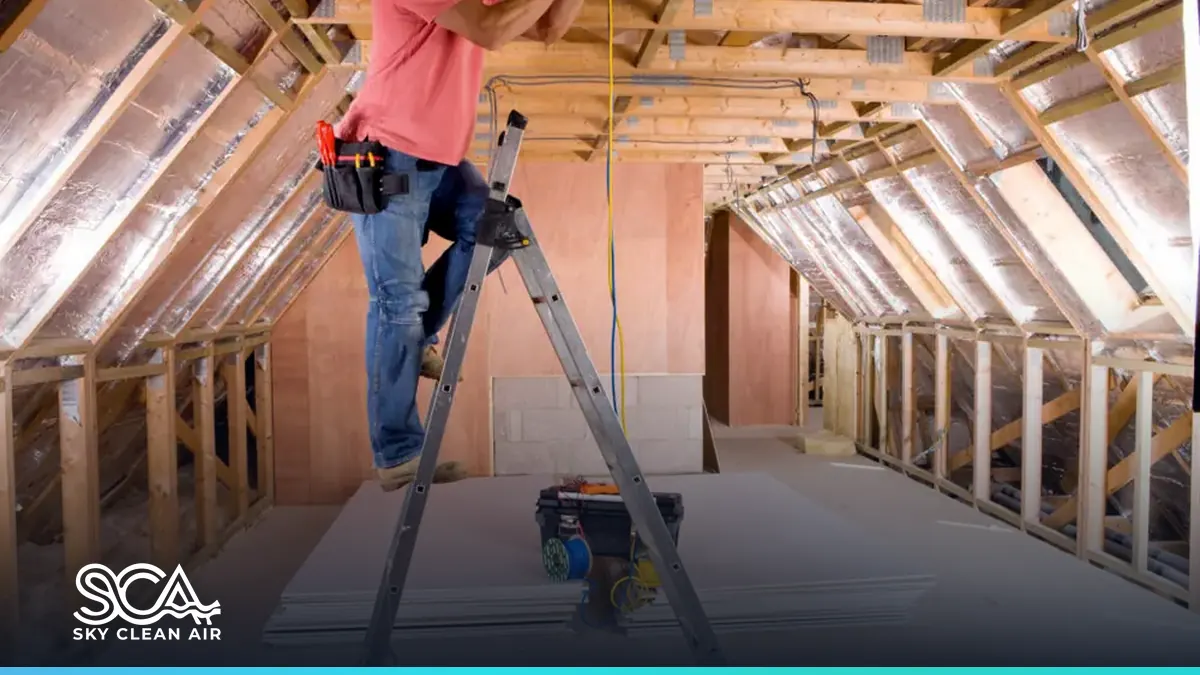
Professional work typically includes containing the attic, removing contaminated insulation, cleaning or treating the framing, and drying everything before new insulation goes in. Our attic cleaning and insulation crew handles that full process.
How do I keep mold from coming back?
Once the attic is clean, prevention comes down to moisture control:
- Make sure every bath fan and the dryer vent go all the way outside
- Keep eave vents clear with baffles so air can move from the soffits to the roof vents
- Seal gaps around light fixtures, pipes and the attic hatch so indoor humidity doesn't rise into the attic
- Have the roof checked after storms
- Insulate ducts and check the AC condensate line for leaks
If mold has affected the air inside your home, our indoor air quality options, such as dehumidifiers and UV lights at the coil, can help keep things in check.