Duct cleaning day goes much more smoothly when the house is ready. The crew needs to reach every vent, the return grilles and the furnace or air handler. A little prep the night before saves time and keeps your belongings out of the way.
What should you do before the duct cleaning crew arrives?
- Find every vent. Walk through the house and note each supply register and return grille, including ones in closets and bathrooms.
- Clear a path. Move furniture, rugs, beds and boxes that sit on or in front of floor and wall vents. Leave about two to three feet of open space around each one.
- Clear access to the equipment. Make sure the crew can get to the furnace or air handler. In many local homes that means clearing a hall closet, a corner of the garage, or the area under the attic hatch.
- Clear the attic access. If ducts or equipment are in the attic, move anything stored below the hatch and make sure it opens.
- Protect fragile items. Take down pictures, decor and anything breakable on shelves near vents.
- Plan for pets. Keep them in a closed room or out of the house. Equipment is noisy, and doors will be opening and closing.
- Set aside parking. The cleaning equipment usually sits on a truck or near the front door, with hoses running inside.
It also helps to know where your filter is and what size it takes. If you have spares on hand, set one out so the crew can put it in when they finish.
What happens during a duct cleaning?
Knowing the process helps you plan your day. A thorough cleaning usually involves:
- Protecting floors and furniture near the work areas
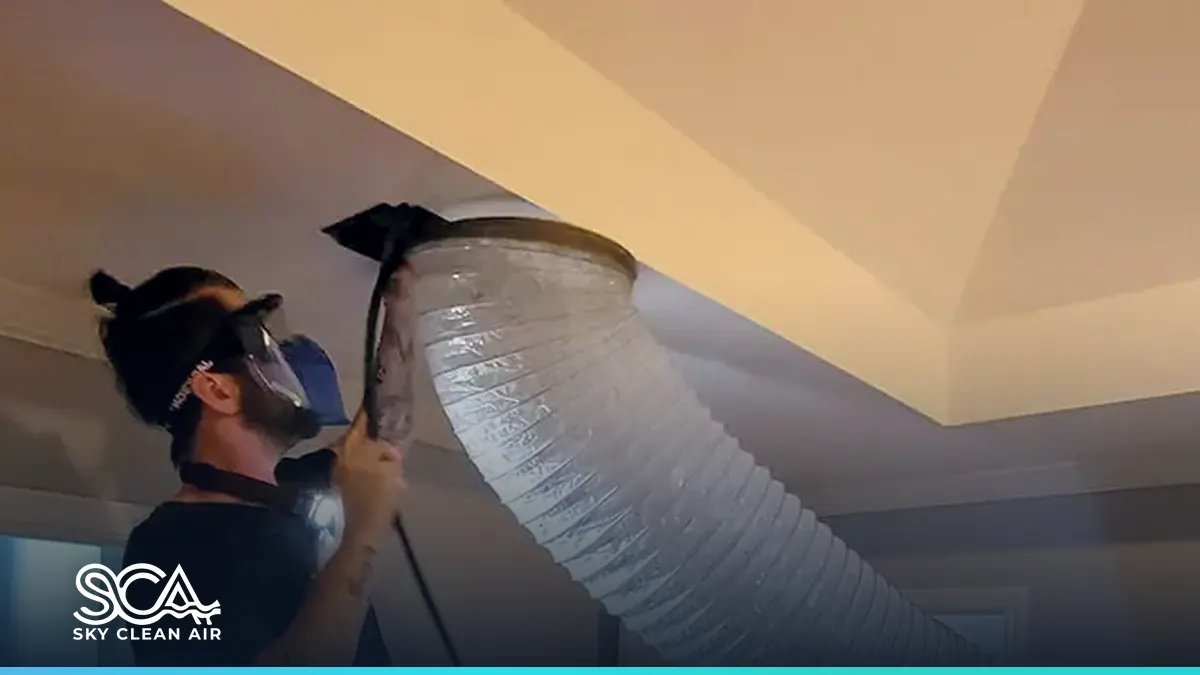
- Connecting a high-powered vacuum to the system to keep the ducts under negative pressure
- Sealing off registers while each run is cleaned
- Agitating debris loose with brushes or air whips in each supply and return line
- Cleaning registers, grilles and the return plenum
- Checking the blower and filter area, and replacing the filter
Most homes take a few hours. Larger homes, homes with heavy buildup, or systems with attic ductwork can take longer. Our air duct cleaning team walks you through the plan before starting and shows you what was found.
Do you need to leave the house?
No. Most people stay home during a duct cleaning. Expect noise from the vacuum equipment and people moving between rooms. If anyone in the house has asthma or is sensitive to dust, they may be more comfortable stepping out for a while, especially if sanitizing is part of the job.
The HVAC system is turned off during the cleaning. On a hot inland summer day or a cold night, try to schedule for the cooler part of the day, and plan around the system being off for a few hours.
What questions should you ask before the cleaning?
- Will the full length of every supply and return be cleaned, or just the vents?
- Is the system kept under negative pressure during the work?
- Will the blower and return plenum be checked?
- Are any chemical treatments or sanitizers being used, and why?
- Will I get photos or a look at the before and after?
Good answers to these tell you the job will be thorough. For current offers, take a look at our specials.
What should you do after the cleaning?
- Put in a fresh filter if the crew didn't already, and set a reminder to replace it on schedule.
- Do a quick dust and vacuum, since a little dust may settle while vents are opened.
- Move furniture back, keeping it off vents and returns where possible so air moves freely.
- Pay attention to how the house feels over the next few weeks. Less dust and better airflow are common.
If the crew found leaky or damaged ducts, ask about sealing or repair. Fixing leaks keeps attic and garage dust from getting pulled back in, so your clean ducts stay clean longer.
Finally, keep an eye on your filter for the first month. It may catch a little more loose dust than usual as the system settles, so check it a bit earlier than normal and replace it if it already looks gray.