Finding dark spots around your vents is unsettling, especially when that air is going into every room. The upside is that mold in an HVAC system follows a pattern, and once you find where the moisture is coming from, you can get rid of it and keep it gone.
What does mold in an HVAC system look like?
"Black mold" is a catchall term people use for any dark mold. You can't tell the species by looking, and you don't need to. Any mold growing inside your system should be removed. Signs to watch for:
- Black, green or gray specks on supply registers or the ceiling around them
- A musty smell that gets stronger when the system runs
- Dark growth on the drain pan, blower wheel or the insulation inside the air handler
- Allergy symptoms that ease up when you leave the house
One thing to know: dark spots on a register are sometimes just dust and condensation, not mold. Cold air hitting a warm, humid room can make a vent cover sweat and collect grime. An inspection sorts out which one you have.
Why does mold grow in HVAC systems?
Mold needs moisture, something to feed on, and a comfortable temperature. An air conditioner can supply all three. The evaporator coil is wet whenever the AC runs, dust provides food, and attics and garages stay warm.
The usual culprits are a clogged condensate drain, a drain pan that holds water, ducts in a hot attic that sweat because they're poorly insulated, or leaky return ducts that pull in damp air. Homes near the coast deal with more humidity, which makes all of these more likely.
Can you remove HVAC mold yourself?
You can handle the small stuff. If you only see surface spots on a vent cover:
- Turn the system off.
- Remove the register and wash it with warm water and detergent, then dry it completely.
- Wipe the visible area just inside the duct opening with a damp cloth.
- Replace the air filter.
- Wear gloves and a mask while you work.
Avoid bleach on metal parts and duct liner. It can corrode metal, it doesn't penetrate porous materials well, and the fumes are rough in a closed space. Also skip foggers and sprays inside the ductwork, which don't reach the source and can leave residue behind.
If the growth is on the coil, blower or inside the ducts, it's a job for a professional. Disturbing it without containment can spread spores through the house.
What does professional mold removal involve?
A thorough job usually includes:
- Finding the moisture source and fixing it, whether that's the drain, a duct leak or poor insulation
- Cleaning the coil, drain pan and blower with products made for HVAC equipment
- Cleaning and sanitizing the ductwork under negative pressure so debris is pulled out, not blown around
- Replacing flex duct that has mold growing in its inner lining, since it can't be fully cleaned
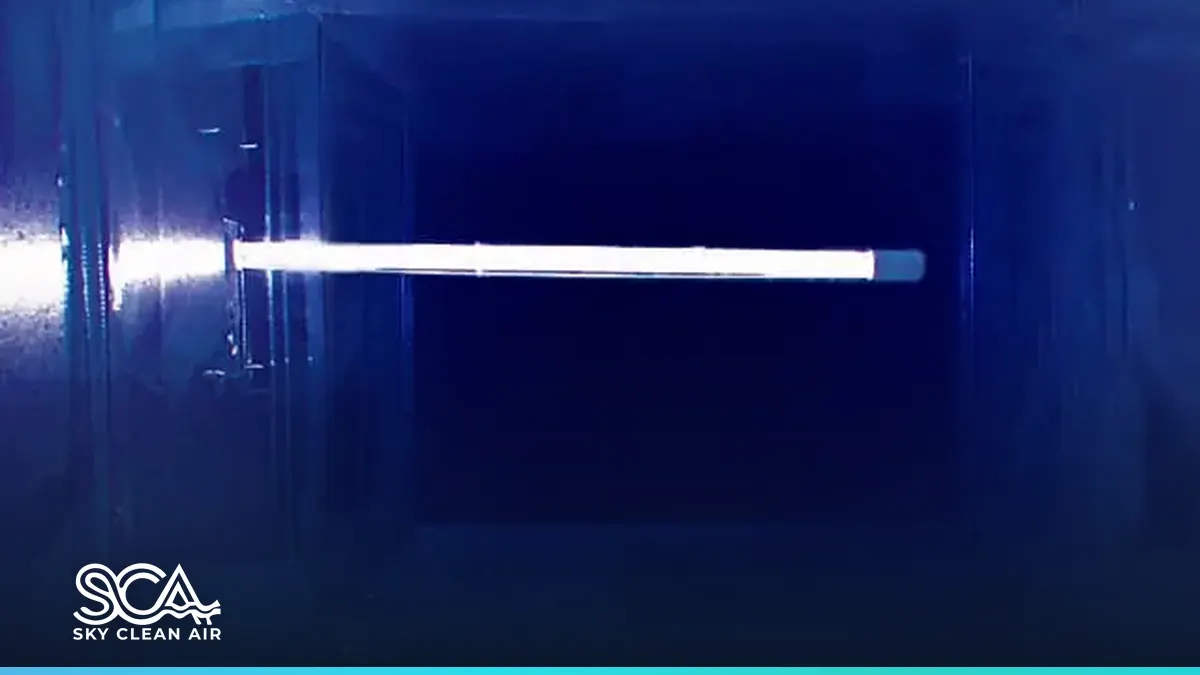
- Adding prevention, such as a UV light at the coil or better filtration
Our indoor air quality team handles inspection, cleaning and prevention, and we work with our duct cleaning and sanitizing crews when the ductwork is involved.
How do you keep mold from coming back?
- Keep indoor humidity in a comfortable range, roughly 30 to 50 percent.
- Have the condensate line flushed and the coil checked every year.
- Change filters on schedule.
- Seal and insulate attic ductwork so it doesn't sweat.
- Run bathroom and kitchen exhaust fans so moisture leaves the house instead of reaching the return.
If mold keeps returning after cleaning, there's a moisture problem that hasn't been solved yet. That's the part to focus on.
What about mold you find in the attic or crawl space?
Sometimes the system is only part of the story. If the air handler or ducts sit in an attic with a roof leak, or return ducts run through a damp crawl space, mold can grow on nearby wood and insulation and get pulled into the system through gaps in the ductwork. In that case, cleaning the HVAC equipment alone won't hold. The leak needs to be repaired, wet insulation removed, and the return ducts sealed so the system only pulls air from inside the living space. Our attic and crawl space crews handle that cleanup, so the fix covers the whole path the air takes.