
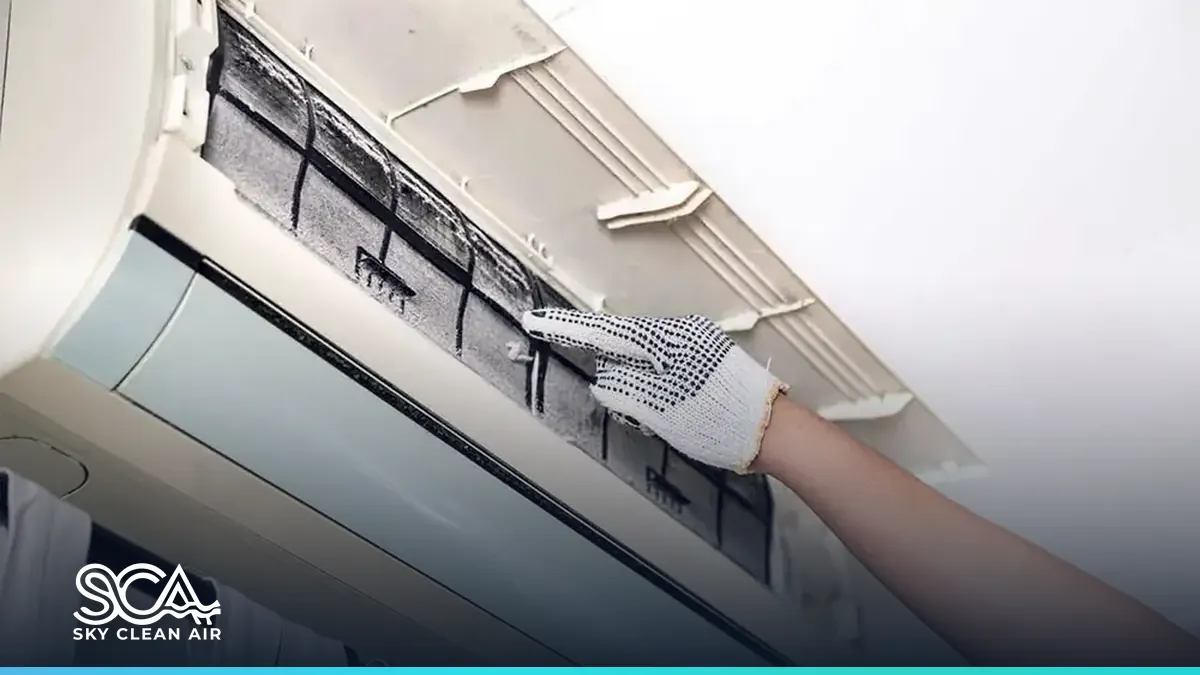
Where is the filter, and what does it protect?
In most homes the filter is in one of two places: behind a large return grille on a wall or ceiling, or in a slot right at the furnace or air handler in the attic, garage or hall closet. Some homes have both, and some have several return grilles with a filter in each.
The filter's first job is protecting the equipment. Dust that gets past it coats the blower wheel and the evaporator coil, which cuts airflow and makes the system work harder. Cleaner indoor air is a second benefit, and how much you get depends on the filter you choose.
How does a filter actually catch particles?
A filter isn't just a screen. Particles get trapped in a few different ways as air weaves through the fibers:
- Straining: particles too big to fit between fibers get stopped.
- Impaction: heavier particles can't follow the air as it bends around fibers, so they hit a fiber and stick.
- Interception: smaller particles follow the air but brush close enough to a fiber to get caught.
- Diffusion: the very smallest particles bounce around randomly and eventually touch a fiber.
Some filters also carry an electrostatic charge that pulls particles in. As a filter loads up with dust it actually catches more, but it also restricts more air, which is why it has to be changed.
What do MERV ratings mean?
MERV stands for Minimum Efficiency Reporting Value. It's a scale from 1 to 16 for residential and light commercial filters. Higher numbers catch more small particles.
| MERV range | What it catches | Typical use |
|---|---|---|
| 1 to 4 | Large dust and lint | Basic fiberglass filters, mainly protecting equipment |
| 5 to 8 | Dust, pollen, mold spores | Standard pleated filters for most homes |
| 9 to 12 | Finer dust, pet dander, some smoke particles | Homes with pets or allergies |
| 13 to 16 | Very fine particles, including much of wildfire smoke | Allergy and smoke concerns, if the system can handle it |
Is a higher MERV filter always better?
Not always. A dense filter in a system that wasn't designed for it can choke airflow. Symptoms include weak air at the vents, a whistling return grille, a frozen AC coil or a furnace that overheats and shuts off.
Thicker media filters, the 4 to 5 inch kind that go in a dedicated cabinet, solve this by giving the air more surface area to pass through. If you want MERV 13 level filtration for smoke season or allergies, a media cabinet is often the better route than forcing a thin high-MERV filter into a one-inch slot.
Activated carbon filters add odor control, which helps with cooking smells and some smoke odor, but they don't replace good particle filtration.
How often should you change the filter?
Check one-inch filters monthly and replace them when they look gray or clogged, often every one to three months. Thicker media filters last longer. Change them more often if you have pets, ongoing construction nearby, or when Santa Ana winds and wildfire smoke are in the air.
Write the date on the filter frame when you put it in. It makes the next check much easier.
What are the signs your filter isn't doing its job?
- Dust settles on furniture within a day or two of cleaning.
- The filter looks dirty only on the edges, or there are gaps around it. That means air is going around it, not through it.
- The filter is bowed or sucked partly into the return. It's either clogged or the wrong size.
- Rooms feel stuffy and airflow at the vents seems weak.
- Allergy symptoms get worse indoors, especially during windy or smoky stretches.
Size matters as much as rating. Check the dimensions printed on the old filter's frame and buy the same nominal size. A filter that's a half inch too small lets dusty air slip around the edges.
When to get help
If you change filters on time and still see dust blowing from registers, the problem may be leaky return ducts pulling in attic dust around the filter. Our indoor air quality team can check filter fit, recommend the right MERV for your system and look at options like media cabinets or air purifiers.