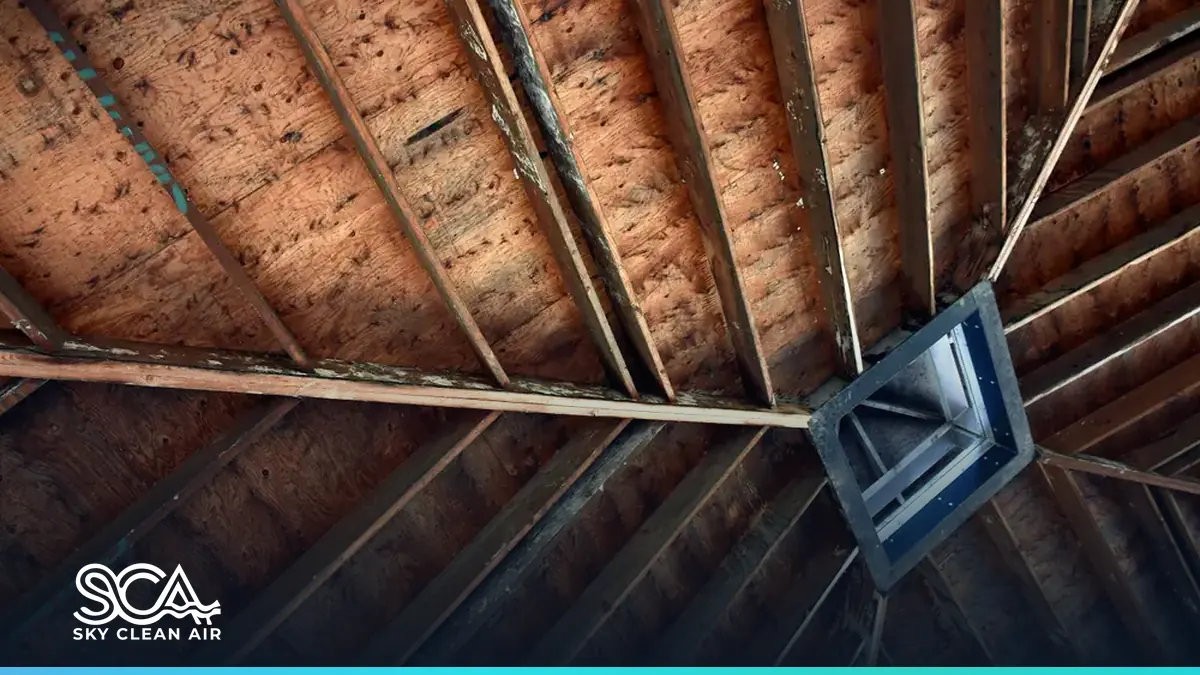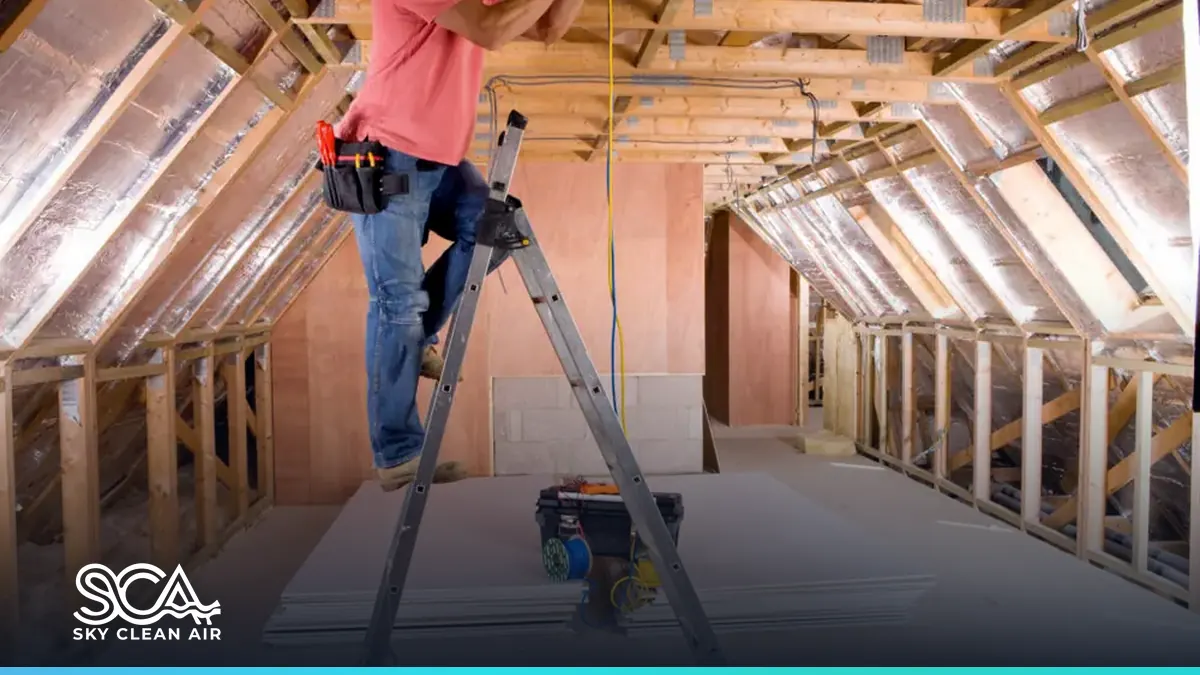
If your crawl space smells, something down there is wet, dead or leaking. A musty, earthy smell points to moisture and mildew. A sharp, ammonia smell usually means rodents. A rotten-egg or sewage smell means you need to look at plumbing, and if you smell gas, that's a different problem entirely.
The smell matters because a crawl space isn't sealed off from the house. Air moves up through gaps around pipes, wiring and floor framing, so whatever is under the floor ends up in the rooms above it.
What does each crawl space smell usually mean?
Your nose is a decent first diagnostic tool. Here's how technicians usually read it:
- Musty or damp, like an old basement: moisture from the soil, a slow leak or poor ventilation, often with mildew on wood framing or insulation.
- Ammonia or sour: rodent urine and droppings, usually from mice or rats nesting in insulation.
- Rotting, sweet and heavy: a dead animal. This tends to fade after a few weeks, but the contamination stays.
- Sewage or rotten eggs: a cracked drain line, a loose cleanout cap or a leak at a toilet flange above.
- Gas: leave the house right away and call the gas utility from outside. Don't flip switches or try to find the leak yourself.
Why do San Diego crawl spaces get damp?
Most homes here sit on slabs, but plenty of older houses have raised foundations with a crawl space underneath. Those spaces sit on bare soil, and soil gives off moisture all year.
Near the coast, the marine layer adds humid, salty air that settles in shaded, low spaces and doesn't dry out quickly. Inland, the bigger issue tends to be irrigation. Sprinklers that hit the foundation, downspouts that dump next to the house and yards that slope toward the wall all push water under the floor.
Blocked foundation vents make it worse. Homeowners sometimes cover vents to keep pests out or plant shrubs right in front of them, and the space stops breathing.
How do you get rid of the smell for good?
Odor removal works in a set order. Skipping a step is why smells come back a month later.
- Find the source. Inspect for standing water, wet soil, damp framing, droppings, nests and plumbing drips.
- Fix the cause. Repair leaks, redirect drainage and close the openings rodents are using.
- Remove contaminated material. Insulation soaked with urine or covered in droppings can't be cleaned. It has to come out and be bagged.
- Clean and sanitize. Treat the soil, framing and debris areas with an appropriate disinfectant and deodorizer.
- Control moisture. A vapor barrier over the soil, clear vents and, in some cases, a dehumidifier keep the space dry.
- Seal it up. Close gaps between the crawl space and the house so any leftover odor doesn't travel upstairs.
Can I clean a smelly crawl space myself?
You can do the easy parts. Clear plants away from vents, fix sprinklers that spray the foundation and extend downspouts so water lands a few feet from the house. Those changes cost little and help a lot.
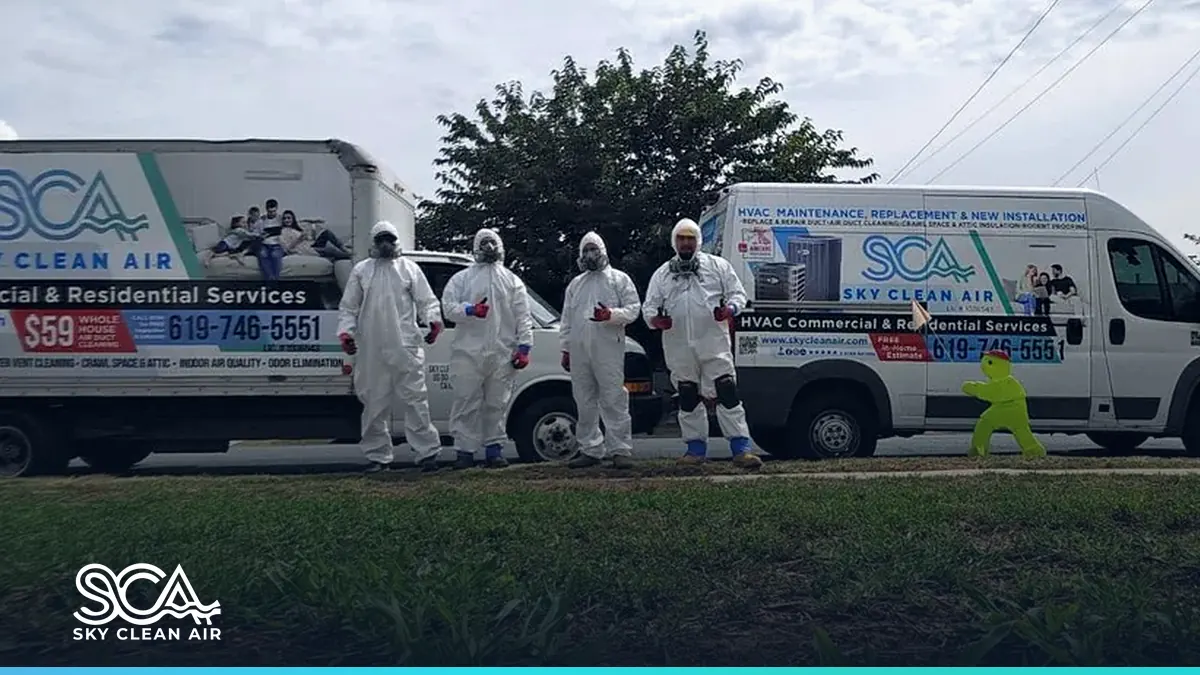
Rodent cleanup is where we'd suggest stopping. Droppings and nesting material can carry disease, and sweeping or vacuuming them dry puts particles in the air you're breathing in a tight space. Removing soiled insulation is also slow, dirty work on your back. Our attic and crawl space cleaning crews wear protective gear, remove contaminated material, sanitize and then seal the entry points.
Will the smell affect the air inside my house?
It can. Air leaks up through plumbing penetrations, electrical holes and gaps at the floor edges. If your ducts run through the crawl space, a leaky return duct can pull crawl space air straight into the system and spread it to every room.
That's why we look at the ductwork during a crawl space inspection. Sealing leaky ducts and sealing the floor above are often what finally stops the "it only smells when the AC runs" complaint.