Why does timing matter for a tune-up?
San Diego weather is mild most of the year, then a heat wave rolls in and every AC in the county starts running hard on the same afternoon. That's when weak capacitors, dirty coils and low refrigerant show up as breakdowns. Service schedules fill quickly during those stretches.
A tune-up done before the rush gives you two things: flexible scheduling, and time to handle any repairs the technician finds without the house already being hot.
When should you book AC maintenance?
Spring is the sweet spot, typically somewhere between March and May. The system hasn't been working hard yet, and you'll catch issues before inland temperatures climb. If you live in inland areas of San Diego County where summers run hot, aim for earlier in spring rather than later.
Coastal homes often see their warmest weather later in summer and into early fall. Even so, a spring visit is a good habit, since that's when it's easiest to get on the schedule.
Is it too late if summer has already started?
No. A tune-up in the middle of summer is still better than none, and if the system is already struggling, don't wait for the fall. Warning signs worth a call right away include warm air from the vents, ice on the copper lines, water around the indoor unit, a breaker that trips, or an outdoor unit that hums without the fan spinning.
If you do book during a hot stretch, morning appointments are easier on everyone, and a technician can check the system while it's under real load.
When should you book heating maintenance?
Early fall, around September through November, before the first cold nights. Furnaces in this area can sit unused for months, and the first time they fire up you'll often smell dust burning off the heat exchanger. That's normal for a few minutes. A burning plastic smell, or one that doesn't go away, isn't.
Fall is also a good time to have the gas furnace checked for safe operation, since it may run more often on cold inland nights. If you ever smell gas, leave the house right away and call the gas utility from outside. If a carbon monoxide alarm goes off, get everyone out and call 911.
What about heat pumps and mini-splits?
A heat pump does both heating and cooling with the same outdoor unit, so it works year round. Service it twice a year, once in spring and once in fall. The same goes for ductless mini-splits, whose indoor heads collect dust and moisture and benefit from regular cleaning.
What does an HVAC tune-up include?
A good tune-up is more than a quick look. It usually covers:
- Checking and replacing the air filter
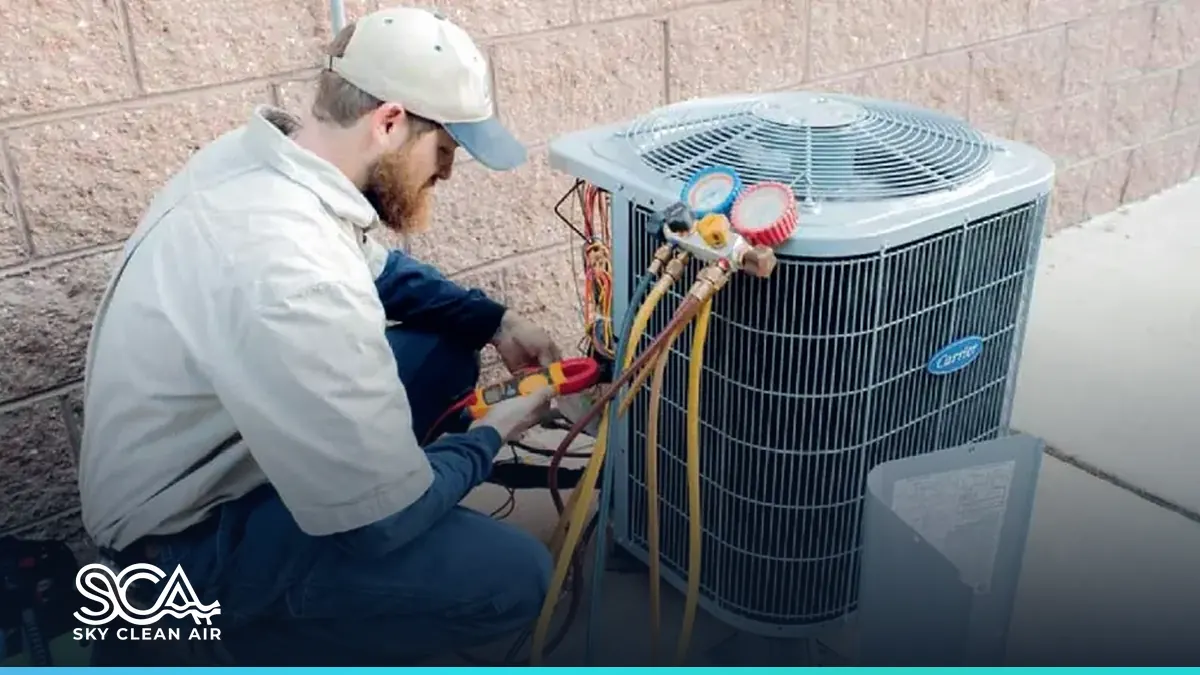
- Inspecting and cleaning the outdoor coil and checking refrigerant pressures
- Testing capacitors, contactors and electrical connections
- Clearing the condensate drain line and checking the drain pan
- Checking blower operation and airflow
- On furnaces, inspecting burners, the flame sensor, ignition and venting
- Testing thermostat operation and system cycles
Near the coast, salt air can corrode outdoor coils and electrical parts faster than inland. That's one more reason to have the outdoor unit looked at every year.
What can you do between visits?
- Check the filter monthly and change it when it's dirty.
- Keep plants, fences and debris at least a couple of feet back from the outdoor unit.
- Gently rinse the outdoor coil with a garden hose (power off first) if it's dusty, especially after Santa Ana winds.
- Make sure the condensate line is draining when the AC runs.
- Listen for new noises and pay attention to longer run times.
If you're buying a home, a tune-up soon after you move in is a good idea regardless of the season. It gives you a baseline on the equipment's condition and a record to start from.
Our HVAC maintenance and tune-up service covers furnaces, air conditioners and heat pumps across San Diego and Orange County. Check our current specials before you book.